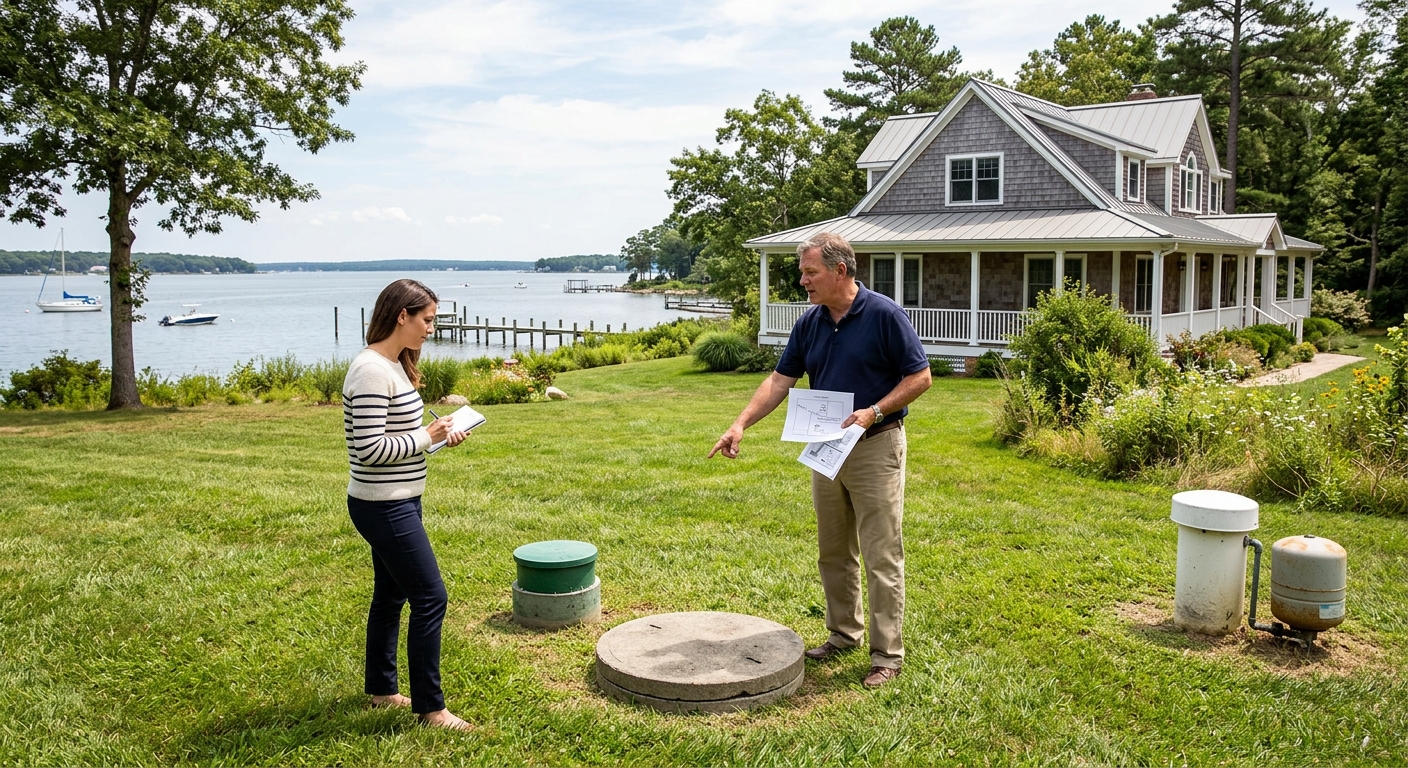
Well & Septic 101: What Waterfront Buyers Need to Know

Many waterfront and rural properties in Anne Arundel County use private well and septic systems instead of public water and sewer. That's not a red flag, it's just a different set of things to understand before you buy.
BAT Systems Carry a Real, Ongoing Inspection Requirement
Here's the requirement that's actually clear and confirmed: if a property has a BAT (Best Available Technology) septic system, the nitrogen-reducing units required for new and replacement systems in the Chesapeake Bay Critical Area since 2013, Maryland law requires the owner to have it inspected and maintained by a certified service provider at least once a year, under an ongoing service contract. This isn't a one-time transfer requirement. It's a standing obligation for as long as you own the property.
If you're buying a home with a BAT system, ask directly: is there a current, active service contract in place, and when was the last annual inspection performed? A lapsed contract on a BAT system is a real red flag, not a technicality, since these units are more complex than a conventional septic tank and need consistent upkeep to actually do their job.
A standard, non-BAT septic system doesn't carry that same annual mandate, but regular pumping (generally every three to five years) and periodic inspection are still the property owner's responsibility and the best way to avoid an expensive failure down the road.
What a Well Inspection Should Cover
Wells don't come with the same mandatory transfer inspection as septic, but skipping one is a mistake. At minimum, water should be tested at both the kitchen tap and a raw-water tap before any treatment system, through a Maryland-certified lab, for:
* Total coliform and E. coli, which can point to septic influence or surface intrusion
* Nitrate and nitrite, often signs of septic or agricultural contamination
* pH and total dissolved solids, which affect both safety and how long your plumbing lasts
* Lead and copper, especially important in older homes
* Iron and manganese, common in local aquifers and usually a taste or staining issue rather than a safety one
It's also worth requesting the Well Completion Report and any permits from the seller or the county health department, which will show depth, casing, yield, and construction details.
What to Ask Before You Make an Offer
* Is there a current, valid septic inspection, and did the system pass?
* How old is the septic system, and when was it last pumped?
* What's the well's tested yield, and has it ever run low, especially in late summer?
* Has the well water been tested recently, and by whom?
* Are there any recorded easements or shared systems with a neighboring property?
Why This Matters More on Waterfront Property
Anne Arundel County properties near tidal water often fall within the Chesapeake Bay Critical Area, which adds extra scrutiny to septic systems specifically because of their proximity to the water. A failing system near the Bay isn't just a repair bill, it's an environmental issue the county takes seriously, and it can complicate a sale if it's not addressed early.
The Bottom Line
Well and septic systems aren't something to be nervous about, but they are something to actually understand before you commit to a property. Anne Arundel's required septic inspection protects buyers more than most counties, but it's still worth asking specific questions rather than assuming everything is fine because no one's mentioned a problem.
If you're looking at a property on well and septic and want a clear read on what to check before you write an offer, I'm happy to walk through it with you.
________________________________
Bonnie Fleishman has specialized in waterfront and move-up real estate across Anne Arundel County for 36 years, serving Pasadena, Glen Burnie, Severna Park, Arnold, Crofton, Gambrills, and Annapolis. This post is general information, not an inspection report. For property-specific guidance, consult a certified well and septic inspector.