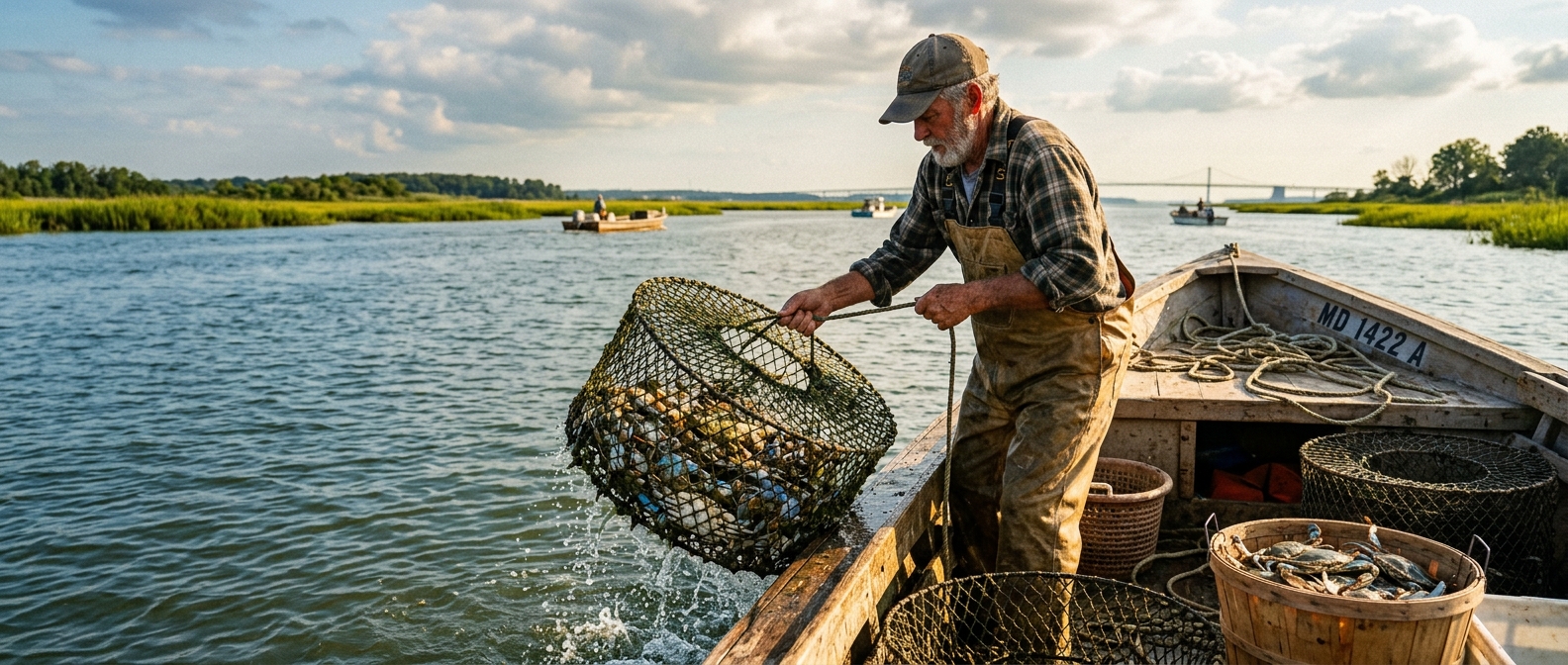
Crabbing: The Real Maryland Tradition
Ask any longtime Anne Arundel County family what makes summer feel like summer, and crabbing comes up before almost anything else. A handline off the dock, a bushel on newspaper, Old Bay everywhere. It's not just a hobby here. It's part of what waterfront living actually means.
When You Can Crab
Maryland's recreational crabbing season runs from April 1 through December 15 in the Chesapeake Bay and its tidal tributaries. In the Bay's main channel, crabbing hours run from a half hour after sunrise to sunset in April and October through mid-December, and a half hour before sunrise to sunset from May through September. You can use handlines, dip nets, and registered private property crab pots 24 hours a day. One quirk worth knowing: recreational crabbing isn't allowed on Wednesdays, with a few holiday-week exceptions.
Do You Need a License?
This is the question everyone asks first. If you're using a basic handline or dip net, the classic backyard-dock method, you don't need a license at all. Once you move up to a trotline, collapsible trap, net ring, or eel pot, a Maryland recreational crabbing license is required, and it's cheap: $5 for residents, less if you already hold a fishing license.
The Waterfront Owner Perk

Here's the part that matters most if you own or are considering waterfront property: owners, lessees, or tenants of private shoreline property can register up to two crab pots for free every year, no license required. The pots just need to be marked with your name and address, and fitted with a turtle reduction device to protect diamondback terrapins. It's one of those quiet perks of waterfront living that doesn't show up in a listing description, but genuinely shapes what daily life looks like once you're living it.
Size and Limits, In Plain Terms
Male hard crabs need to measure at least 5 inches (5¼ inches after mid-July) to keep. Without a license, you can keep two dozen male hard crabs and a dozen peelers or soft crabs per day. With a license, that jumps to a full bushel. Boat limits vary depending on how many people are aboard and whether anyone holds a license, so it's worth double-checking current limits before you head out, since they get adjusted from year to year based on the health of the crab population.
Where to Actually Drop a Line
You don't need a boat to crab well in this county. Public piers, county parks with water access, and plenty of bridges and docks around Pasadena, Arnold, Severna Park, and Annapolis are all fair game. If you own waterfront property, your own dock is usually the easiest spot of all, no drive required, no crowd to compete with.
Why This Matters Beyond the Bushel Basket
For a lot of my clients, this is exactly what they picture when they imagine owning waterfront property here. Not just the view, the actual life that comes with it: crabbing off your own dock on a summer evening, kids learning to tie a chicken neck to a string the way their parents did. It's a small thing, and it's also the whole reason people fall in love with this part of Maryland in the first place.
If waterfront living, crab pots included, is part of what you're picturing for your next home, that's a conversation worth having.
________________________________
Bonnie Fleishman has specialized in waterfront and move-up real estate across Anne Arundel County for 36 years, serving Pasadena, Glen Burnie, Severna Park, Arnold, Crofton, Gambrills, and Annapolis. The Maryland Department of Natural Resources sets crabbing regulations, and they can change year to year. Check current rules and limits at dnr.maryland.gov before you head out.