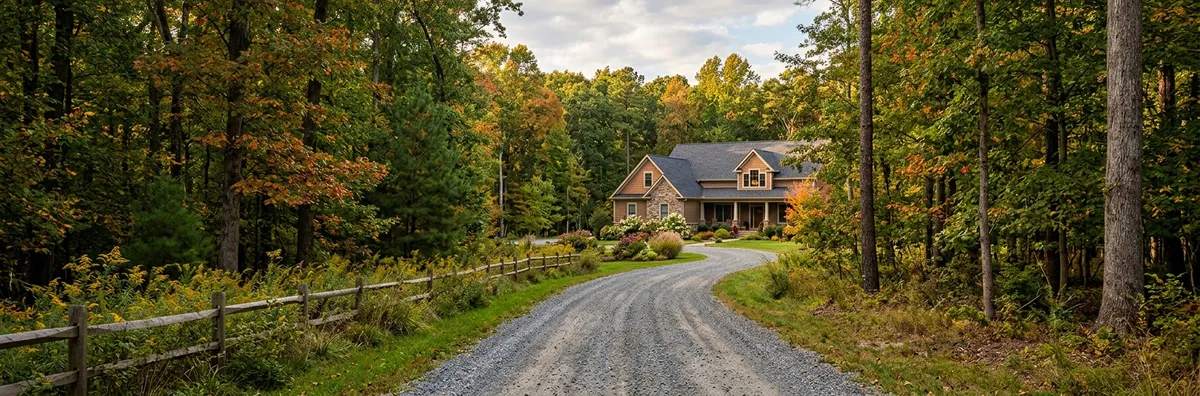
Buying a Home on a Private Road in Anne Arundel County? 7 Questions to Ask Before You Fall in Love With the House
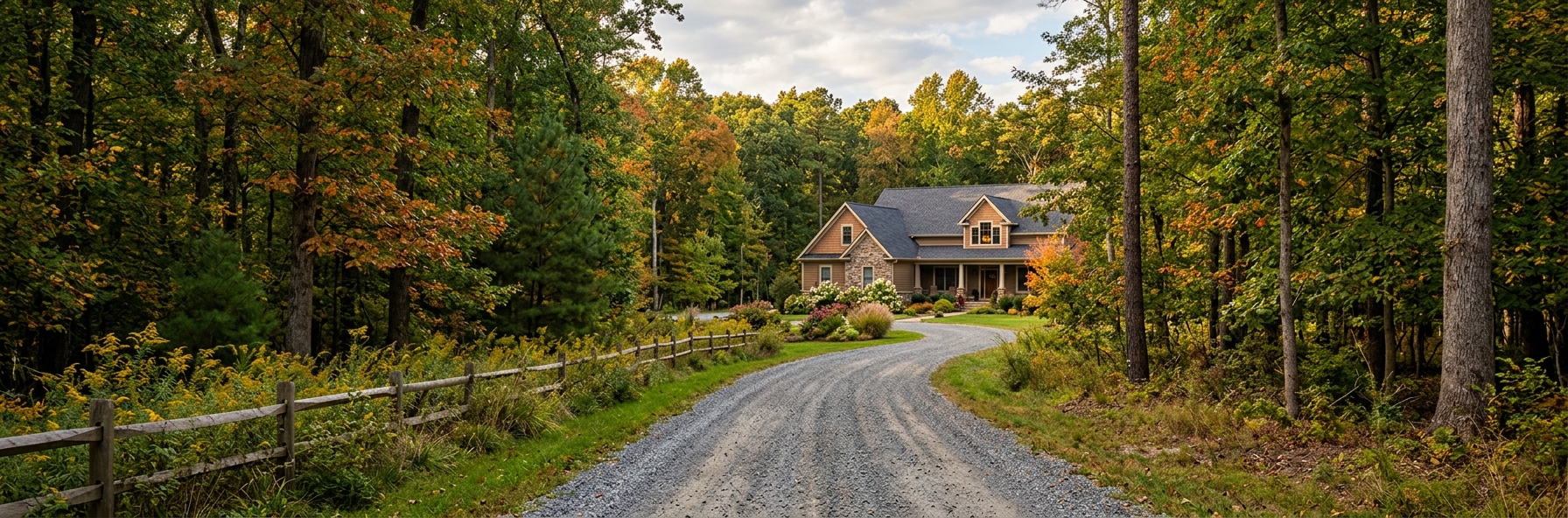
You turn down a quiet lane in Anne Arundel County, the traffic disappears behind you, and suddenly you're looking at exactly the kind of house you've been hoping to find. There's privacy, mature trees, fewer cars passing by and maybe enough distance from the neighbors to make the property feel like its own little retreat.
Then someone mentions that the road is private.
For many buyers, that sounds like a minor detail. In reality, it deserves a few more questions because a private road can affect maintenance responsibilities, expenses, access and potentially even financing.
None of those things automatically make the property a bad purchase. Private roads are simply one of those real estate details where knowing what you're agreeing to before closing can save a lot of confusion afterward.
First, What Does “Private Road” Actually Mean?
A private road isn't maintained the same way as a road accepted into Anne Arundel County's public road system.
The distinction matters because someone still has to maintain that road.
Potholes don't know whether they're public or private. Neither do fallen trees, drainage problems, deteriorating pavement or winter weather.
Depending on the property and the documents governing the road, maintenance responsibility may fall on individual property owners, a homeowners association, multiple neighbors sharing the road or another private entity.
That's why “Who maintains the road?” should be one of your first questions, not something you figure out after settlement.
1. Who Actually Owns the Road?
A road that looks like any other residential street from the driver's seat may have a completely different legal structure on paper.
Find out who owns it and how your property obtains legal access to it. Your title company and other professionals involved in the transaction can help identify recorded deeds, rights-of-way, easements and agreements affecting the property.
You aren't simply asking whether everyone has always used the road. You want to understand the legal rights tied to your property.
2. Who Pays for Maintenance and Repairs?
This is where the practical side of private-road ownership becomes very real.
If the pavement deteriorates, who pays to repair it? If gravel needs to be replaced, drainage needs attention or a tree comes down across the road, who handles it?
Perhaps every homeowner contributes equally, or expenses may be divided according to a recorded agreement. An HOA could collect money for maintenance, or neighbors may have historically handled repairs more informally.
Don't assume that an informal system is the same thing as a legally enforceable agreement.
Ask to see the documents.
3. Is There a Recorded Road Maintenance Agreement?
This is especially important when financing the purchase.
Fannie Mae's current guidance for properties located on community-owned or privately owned and maintained streets generally calls for an adequate, legally enforceable road-maintenance agreement or covenant, subject to certain exceptions. Among other things, such an agreement typically addresses responsibility for repair costs and what happens when someone doesn't fulfill their obligation.
That means this isn't merely a neighborly question about who calls the paving company.
Your lender may care, too.
If you're seriously considering a property on a private road, involve your lender and title professionals early to determine what documentation you'll need for your particular loan.
4. How Much Does Road Maintenance Actually Cost?
A maintenance agreement tells you how costs are divided, but buyers should also try to learn what those costs have looked like historically.
Ask whether major repairs have recently been completed and whether any are anticipated. Find out whether owners make regular contributions to a maintenance fund or simply receive a bill when something needs to be done.
A beautiful long private lane can be charming when you're driving down it on a sunny afternoon. It can feel a little different when several property owners need to agree on a major repair.
Understanding the history gives you a much better idea of what ownership may actually look like.
5. What Happens During Snow and Ice?
Snow removal isn't the first thing most buyers think about during a spring or summer showing, but January eventually arrives.
Find out who plows the road, how quickly it is typically cleared and how the cost is divided. If the road is steep, narrow or heavily wooded, winter accessibility may deserve even more attention.
This is especially important if your household has a commute that can't wait for the weather, young drivers, older family members or other accessibility concerns.
Privacy is wonderful, but practical access matters year-round.
6. Can Emergency and Service Vehicles Easily Reach the House?
Look at the road with something larger than your own vehicle in mind.
Would an ambulance, fire apparatus, moving truck, propane delivery vehicle or large contractor vehicle have reasonable access to the property?
Anne Arundel County has established design guidance for privately owned and maintained infrastructure, including private roads and common-use access easements, in part because road design intersects with public safety and welfare.
An existing home's circumstances may differ from those governing new development, so you can't judge this simply by the width of the pavement. When access raises questions, investigate them.
7. Could the Road Ever Become Public?
Anne Arundel County does have a Road Acceptance Program through which a community can petition the County to accept an established private roadway into its maintenance system, but acceptance isn't automatic.
County requirements must be satisfied, and owners of properties abutting the private roadway—including those with certain easement or property interests—must agree to the acceptance and petition process. The roadway must also satisfy other County criteria.
In other words, don't buy a property assuming, “The County will probably take over the road someday.”
That possibility may exist, but your decision should be based on the road's status today.
Private Doesn't Mean Problematic
There are plenty of reasons buyers love homes on private roads. They can offer less traffic, additional privacy, and a setting that feels worlds away from a busy main road.
The goal isn't to avoid them.
The goal is to know exactly what comes with the house.
Before purchasing, understand the ownership and access rights, read the maintenance agreement, determine how expenses are shared, talk with your lender about financing requirements and ask questions about how the road has actually been managed over the years.
That little lane leading to your dream house may be part of what makes you fall in love with the property. Just make sure you understand who takes care of it after the moving truck leaves.
Anne Arundel County real estate has plenty of properties where the details aren't obvious from the listing photos, and those are often the details that matter most once you become the owner. If you're thinking about buying in the area, I'd be happy to help you look beyond the bedrooms, bathrooms and beautiful finishes and ask the questions that help you make a confident decision.
Bonnie Fleishman | Anne Arundel County Real Estate