Crofton Country Club Living: Where Everyday Life Feels More Relaxed and Connected
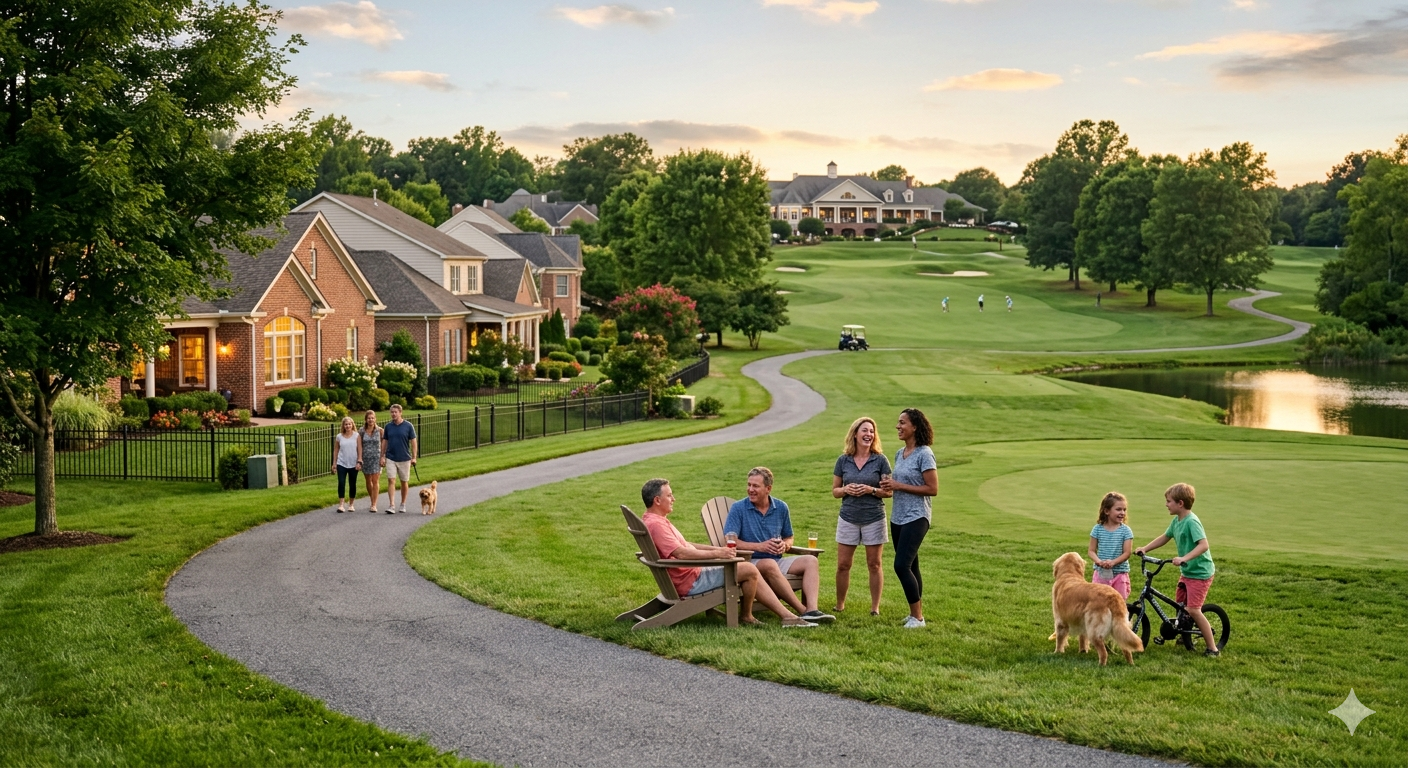
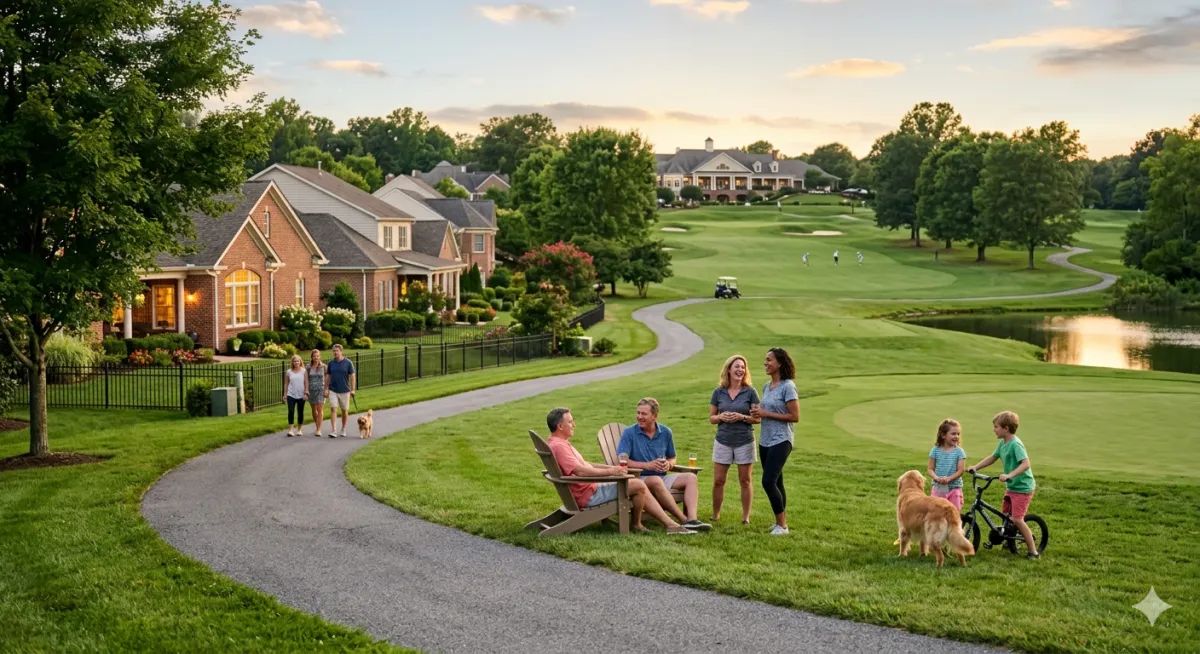
There’s a very specific feeling you get when you drive into the Crofton Country Club community in Crofton, and it’s different from almost anywhere else in Anne Arundel County. It doesn’t feel rushed. It doesn’t feel overbuilt. It feels established in a way that’s hard to replicate with newer developments.
The roads curve instead of running straight. Trees are mature and actually provide shade instead of just being decorative. Homes aren’t stacked on top of each other. There’s space between them, and that space changes how everything feels when you’re there.
What stands out right away isn’t just the golf course itself. It’s how integrated it is into the entire community. You don’t feel like you’re living next to a course. You feel like the neighborhood was built around it, and over time, everything settled into place naturally.
That matters more than most buyers expect.
People who move into Crofton Country Club aren’t usually chasing something flashy. They’re looking for consistency. They want a neighborhood that feels stable, where things don’t change dramatically year to year. That’s one of the biggest draws here.
The real estate itself reflects that.
You’re not going to find a single style of home. Instead, you’ll see a mix of colonials, split-levels, and traditional layouts that were built during a time when space and function were prioritized. Many of the homes have been updated over the years, but the underlying structure remains solid.
Many buyers are surprised by the lot sizes. Compared to newer communities in surrounding areas, homes here tend to sit on larger, more usable lots. That gives you flexibility. More privacy. More room to actually use your outdoor space, not just look at it.
And then there are the homes that back directly to the course.
Those properties tend to get the most attention, and for good reason. The views open up. Instead of looking into another house, you’re looking across fairways, trees, and open space. It changes the entire experience of the home.
But even homes that don’t sit directly on the course still benefit from the overall layout of the neighborhood. There’s a sense of openness that carries throughout.
One thing that doesn’t always get talked about enough is how quiet the area feels. Not silent, but calm. You don’t get much through traffic. Most people driving through the neighborhood either live there or are visiting someone who does.
That creates a different kind of environment. Kids ride bikes. People walk in the evenings. Neighbors recognize each other.
It’s not a forced community. It just happens over time.
The golf course itself is a central part of the experience, but it’s not overwhelming. You don’t have to be a golfer to appreciate living here. In fact, many homeowners aren’t actively golfing. They just enjoy what the course adds to the environment.
That said, for those who golf, having access to Crofton Country Club is a major benefit. The course has been part of the area for decades, and there’s a sense of tradition tied to it. It’s not just a place to play. It’s part of the neighborhood's identity.
There are also club amenities that add to the lifestyle. Pool access, social events, and community gatherings create opportunities for people to connect in a more structured way if they want to.
What’s interesting is how the community balances that. You can be as involved or as independent as you want. Some residents are very active in club life. Others simply enjoy the setting and keep to themselves.
That flexibility is part of what makes the area appealing to a wide range of buyers.
Location is another major factor that keeps Crofton Country Club consistently in demand.
You’re positioned almost perfectly between Annapolis, Baltimore, and Washington, D.C.. For people who need to commute, that central location makes a big difference. You’re not locked into one direction.
At the same time, when you’re actually in the neighborhood, you don’t feel like you’re in the middle of a busy corridor. That separation between access and atmosphere is something buyers notice quickly.
Schools also play a role in why people choose this area. Crofton has long been known for strong school options, and for families, that becomes part of the long-term decision.
But even beyond schools, there’s a broader sense of stability in the area. Homes don’t turn over as quickly as they do in some newer developments. People tend to stay longer. That creates consistency in the neighborhood, which in turn supports property values over time.
From a real estate perspective, Crofton Country Club tends to hold its value in a steady, predictable way. It’s not usually about sharp spikes. It’s about reliability.
Homes that are well-maintained and updated appropriately tend to attract strong interest when they hit the market. Especially those with desirable lot positions or course views.
There’s also a noticeable difference in how buyers react to homes here compared to more modern, newly built communities. In newer areas, buyers often focus heavily on finishes. Countertops, flooring, fixtures. In Crofton Country Club, while those things still matter, buyers pay just as much attention to the setting.
The lot. The street. The way the home sits within the neighborhood.
That broader perspective often works in favor of sellers here.
Another thing that stands out is how the neighborhood feels at different times of day. Early mornings are quiet and open. Evenings bring people outside. Weekends have a steady rhythm without feeling busy.
It’s consistent.
That consistency is what a lot of people are actually buying into, even if they don’t say it directly.
There was a buyer who initially focused on newer construction in nearby areas. Everything felt clean, updated, and move-in ready. But something about those neighborhoods felt a little too uniform.
When they walked through Crofton Country Club, the reaction was immediate. It felt different. More lived-in. More established. They could picture themselves there in a way they hadn’t been able to before.
They ended up shifting their entire search.
That kind of shift happens often with this community.
Because once you feel it, it’s hard to ignore.
Of course, it’s not the right fit for everyone. Some buyers want brand-new construction. Others want a more urban or waterfront environment. Crofton Country Club sits in its own lane.
But for buyers looking for space, stability, and a neighborhood that has proven itself over time, it consistently rises to the top.
And for sellers, understanding what makes the area appealing is key to positioning a home correctly when it goes to market. It’s not just about listing the features. It’s about telling the neighborhood's story in a way that connects with the right buyers.
Bonnie Fleishman is a real estate agent with Douglas Realty in Anne Arundel County, Maryland, who works closely with buyers and sellers in Crofton and the surrounding areas. Her approach focuses on helping clients understand not just the numbers, but how different communities function in real life, and how that impacts both buying decisions and long-term value.
If you’re considering buying or selling in Crofton Country Club, spending time in the neighborhood, walking the streets, and seeing how it feels at different times can give you a level of clarity that no listing ever will.